
Why your company is not your community: And why it matters.
At last year’s The Gathering Festival here in Banff, Alberta, Chris Kneeland’s closing keynote invited marketing leaders to approach their audience differently.
Instead of trying to build a new audience, Chris argued, we should be looking for existing audiences that are adjacent to (or even not that adjacent to) the people we want to reach, and find ways to get their attention.
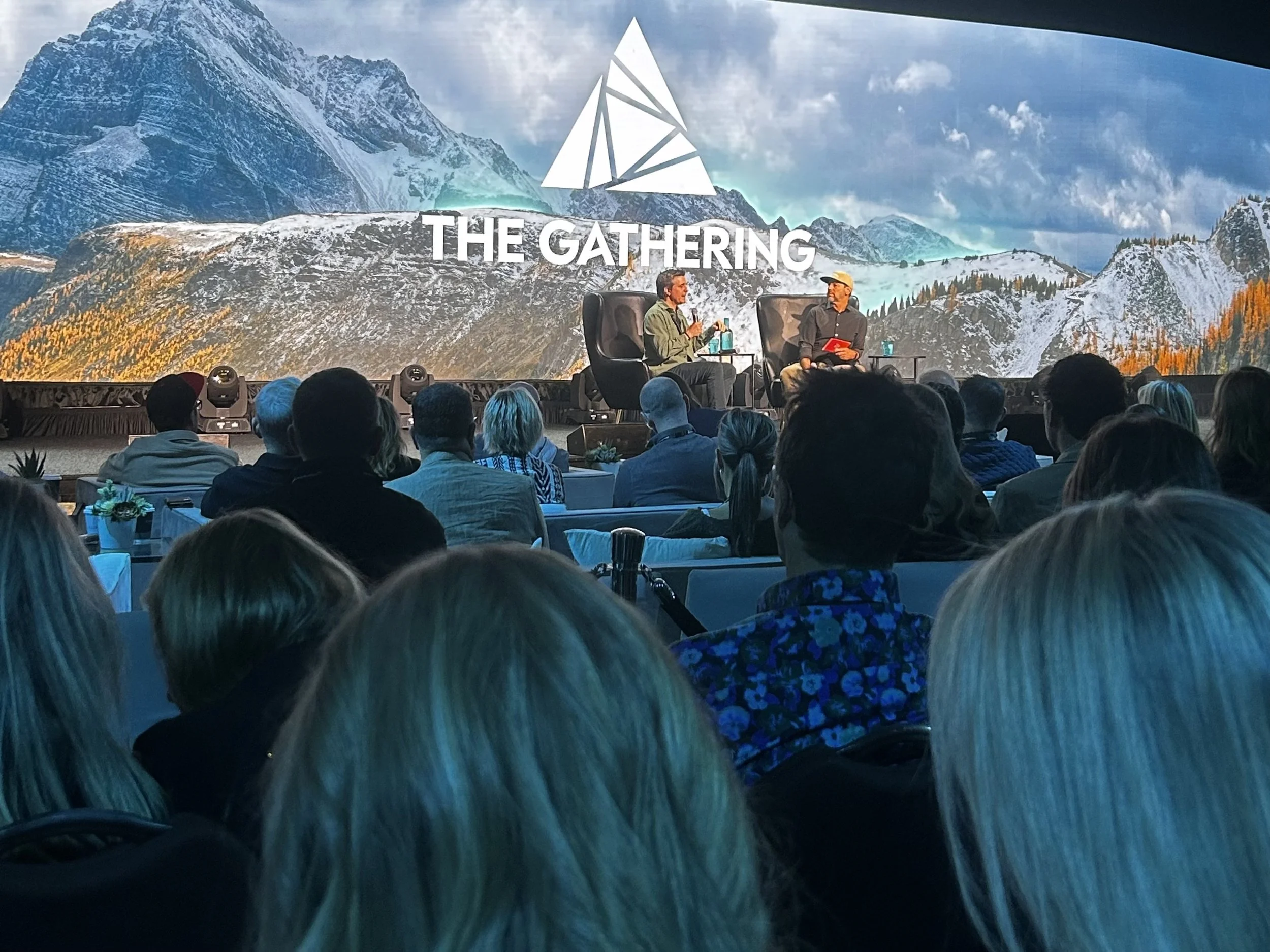
The Gathering, Banff, October 2025
I love this idea. And it’s probably more familiar to you than you realise.
Good example: Red Bull. They are the masters at doing this. Ultimately, Red Bull is an energy drink. There is really only one physical product. But by stepping into a huge variety of adrenaline sports, niche events, rap battles, and gaming, Red Bull opened up the brand to an exponentially larger audience. You see the name everywhere - even to the extent that you probably no longer even think of it as a soft drink company.
There are a lot of reasons why this works. Obviously, it’s efficient: tapping into an existing audience is much, much quicker and easier than building one from scratch.
But there’s more going on. Because this wouldn’t work if there wasn’t sufficient cohesion between the existing members of that audience you’re trying to reach. If it was a loosely formed, low commitment, half-in-half-out kind of group, this approach would not work.
No, it works when you speak to tribes. When you speak to people whose identity is so tied into that community that they will collectively pay attention to something entering into it. A new member, a new voice - or a new brand.

The finish line at Calgary 70.3. Lack of beard proves how long it has been since I did this.
I’m a very average (and slightly lapsed) amateur triathlete. Triathlon is very much a tribe. We have our own language, our own habits, our own brands. But it’s still a niche sport. It is not (yet) large enough to support multiple brands that deliver products only to triathletes, and so there are relatively few that do so.
Instead, we see lots of brands that offer products to multiple different sports, but also speak directly to triathletes, mainly through athlete deals and event sponsorship. The athletic apparel brands On and Hoka are good examples.
And collectively, triathletes paid attention. Something new came along, it was positioned in the triathlete’s marketplace with enough triathlete-specific language to make it feel like they cared about triathletes specifically, a few professional athletes signed deals, and before you know it, every amateur in the age group transition zone is wearing a pair of $300 carbon-plated On Cloudbooms.
>><<
What matters here - what makes all the difference, in fact - is that there is a community.
Not a disparate, unconnected group of individuals.
A community.
And there is a difference.
Groups are temporary.
Communities are much harder to quit.
So what makes this difference?
I’ve been thinking a lot about this recently, and done the best I can to figure out what makes communities special. And I eventually came up with a list of seven factors that mark them out.
Here it is:
Probably the most important factor is a shared interest. There has to be some “thing” outside of the members that brings them together. Interestingly, this may not be as specific as you think. For example, lobbyist communities don’t necessarily have a single exclusive cause - rather it is the lobbying, change-making bit that creates the shared interest.
Second to this, members of a community must put the community’s objectives above their individual ambitions. Does this mean that selfishness never presents inside established communities? Absolutely not. If only. But where individual ambition does emerge, it quickly becomes very difficult to remain a member of that community, and a choice must be made.
Thirdly, members of the community must meet on a regular basis. Now, what “regular” means exactly will vary - many triathletes will only race once per year, for example (it’s expensive). But they may connect with their community through training groups, online comments, social media, and so on.
Factor number four: a community’s members share at least some values and beliefs - but not necessarily worldview. This is important. Let me explain why: I’m a guitar player. My wife and I send our daughters to a Christian school. Now many of my fellow guitar players don’t, and wouldn’t, do this. But we would all agree on the value of music as a crucial part of a childhood education. Some shared values. Some shared beliefs. But probably not a shared worldview. However that is enough for a community, and it also explains point number 5.
…which is that communities are inclusive, not exclusive. This means that as long as you subscribe to the purpose and interests of Community A, you are generally able to join. It further means that you are not excluded from also joining Community B, as long as you also subscribe to the purpose and interests of Community B, and that A and B are not irreconcilable.
Point number 6: membership of a community shortcuts the normal time and effort we take as human beings to bond. Oh, you’re a triathlete too? Or You play guitar? Instantly the conversation moves from the mundane - small talk and trivialities - to a more intimate connection. (Incidentally, this is a good way to figure out if you’re in a real community, or something that just wishes it was one - do you bypass the small talk when you meet someone and discover you share that thing in common? If so, well, that’s a good sign it’s a real community, and not something else).
Final point: community members generally pull together in times of adversity. “When one of us hurts, we all hurt”. This, perhaps more than anything else, is what creates the sense of belonging that identifies communities and keeps people attached to them.
So now a question: if you look at that list, and reflect on groups you are part of, how many of those groups (and we’ll stick with that word for the purpose of this exercise) truly qualify as communities?
I can identify a few communities I am part of:
Our church (www.experiencechurch.ca, truly a special place);
Our immediate families;
I’ve already mentioned The Gathering (and no, I’m not being paid to say this) - it is unmistakably a community;
And I’ll go ahead and include my coaching groups - airflo and Escape Pod - because I design them with community in mind, and the feedback from my clients confirms it.
There are plenty of other so-called “communities” you may be part of that would not qualify, most of which you probably wouldn’t name here, but:
the “LinkedIn community” (or any social media following) is not a community (fails on at least five of my seven points);
Political groups are not a community (these groups - whatever their stated cause, left, right, or anything else - pretend to be welcoming but are actually highly exclusive so fail on point 5 if nothing else);
And I would guess that for most people, your employer is probably not a community (despite what the company culture page on the website says). Of course, you may find communities from amongst your colleagues, but the community does not come from the fact you work for the same company. That is rarely an authentic or lasting bond.
Now this post is already too long, but one final thing to say.
I’ve been spending a lot of time at my local branch of Long & McQuade Musical Instruments. For those who don’t know it, L&M are Canada’s largest retailer of musical instruments and everything else you could possibly need to learn, write, perform, record (or in my case, butcher) music.
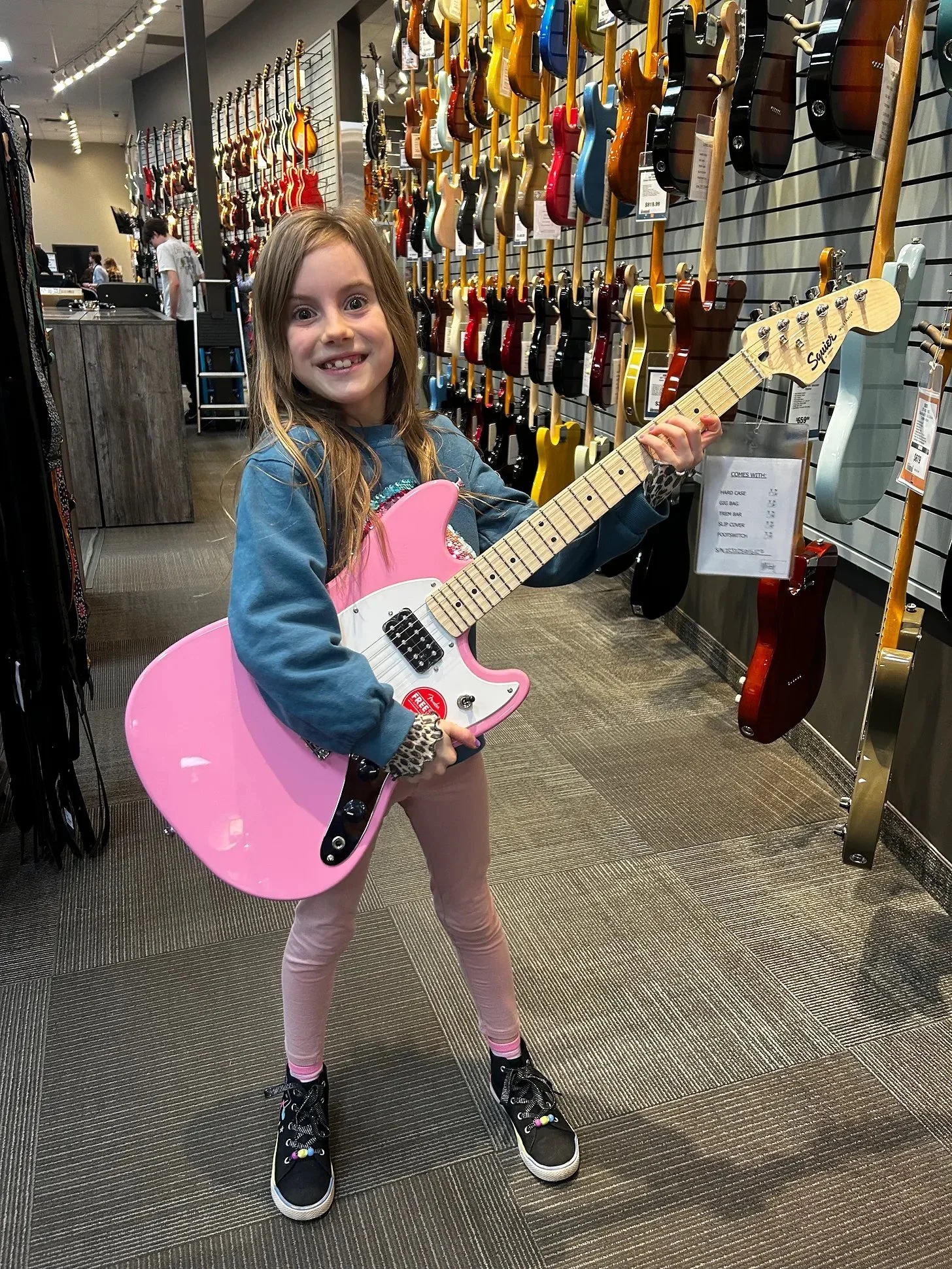
In between lessons at Long & McQuade
My daughter has started guitar lessons at the Chinook location in Calgary, so we’re there at least once a week. And I realised this week - this is not just a retail outlet; it’s a community. Shared interests. Belief in the power of music. Welcoming advice and guidance for the beginner as much as the professional. A great place to meet and connect with other musicians.
L&M could honestly be its own Substack piece but I’m out of space. There’s so much I could say about this place as a sign of a healthy, positive place for people to come together.
Or in other words, a community.
>><<
I wrote last week about community being one of the prerequisites to being a useful, productive person in today’s world.
And the more I’ve thought about it, the more I’ve been reflecting on just how important community is.
Which means that picking the right ones is also important.
I’ve seen people who join the right communities have their entire lives changed for the better. It’s happened to me.
So think about it.
What communities would you say you are part of?
Are they really communities?
Are they changing your life for the better?
Or do you have some decisions to make?