
What OCD and addiction teach us about free will: And why it matters for you too
In delicate moments of disagreement or conflict - with our spouses, with our coworkers, with our kids - there is a moment where everything can change.
Sometimes it passes unnoticed. An opportunity we miss.
And the opportunity is this: to pause.
To pause between the emotion, and the expression of that emotion. Between feeling a thing internally, and showing it outwardly. Between what we think we know, and what we choose to show.
Between one outcome, and another.
And the choice between choosing this pause - or not - matters. A lot.
Here’s why.
>><<
I spend more time than I would like on LinkedIn. It’s where I connect with clients. It’s where I find smart people who can help me with my business and fill the many, many skill gaps I have. And it’s where I get a sense of what people are talking about.
And lately - surprise surprise - everyone’s been talking about AI. And by lately, I suppose I mean about a year.
(Side bar: this article is not about AI. But indulge me for a minute).
There are many different angles.
Hustle culture influencers who work an hour a month while their agents do something unspecified which generates untold riches.
Entrepreneurs trying to figure out how to use AI in their businesses.
Consultants with the answers to that problem.
And then another category which I classify as “everyone else”: those who are using AI in some small but consistent way, having identified some usefulness, primarily through the most readily-available, cheapest tools, with the most quotidian applications - meeting transcripts, copy generation (please no), image creation (please no again) and so on.
Adoption within this group (in which I count myself) has been incredibly fast. We’ve gone from not using the tools at all, to making them part of our daily workflow, all inside a period of about a year.
In fact, the only thing faster than adoption is the return to more human forms of interaction and engagement with the world.
Using AI has, for many of us, essentially been the technological equivalent of touching a hot pan. We snatch our hands away in pain as soon as we realise what’s happening.
Yes, it works, and yes, it creates efficiencies: but, as with many efficiency gains, something else is lost that you miss when you realise it’s gone.
And what’s emerging - even after so short a period of adoption - is a return to human interaction and connection.
Our collective experience, having been fed a diet of AI slop, is that, like all junk food, it leaves us hungrier than ever for something nutritious and sustaining.
A few posts I read this week brought this home to me. Rhea Beierle, Founder of Renegade Ideas, wrote about the experience of starting a small business, and the discovery that human connection still counts above any technology. Emily Bargabos, Founder of Steady (an amazing addiction support platform) wrote about the mistakes she’s made - and the magic we get from those mistakes. And Parker Pursell, owner of Pursell Farms and Founder of Ordinary Men, wrote about having donuts with his kids.
These are small moments. But they shape a narrative. They’re the things you remember. They’re the things you are motivated to engage with.
They’re the things you pause on.
>><<
So, there are easy pauses (in response to pleasurable emotions and experiences) and harder pauses (in response to fear and other negative experiences).
What’s interesting to me is that the easy pauses can have a negative effect on our lives.
And choosing the hard pauses can have an overwhelmingly positive effect on our lives.
Spending too much time with things that make us feel good can damage our ability to make good decisions.
But learning to interrupt negative cycles and patterns of behaviour can strengthen our emotional regulation and impulse control.
When you hit upon this realisation, you start to understand what a torturous, beautiful, immensely complex experience the human condition really is.
>><<
What I’m ultimately talking about here is freedom, and its companion, free will.
Our society looks at freedom as an expression and consequence of having choices. Very often, it is associated with status and power, and, inevitably, with the financial means at our disposal.
Wealth at least allows more choice (but not necessarily a vision of freedom that everyone would agree on) - so it’s not only about money. It’s also about cognition; our ability to make good choices that produce the outcomes in our lives that we desire not just in the short-term, but over months and years.
To make this more real, imagine for a moment living without any such ability.
Imagine being completely unable to choose between instant gratification, or instant response to an impulse, and the possibility of better things in the future if gratification is delayed or the impulse ignored.
For example, spending $100 now on something for a quick dopamine hit, instead of saving it and growing it so that one day you can pay off a debt or support a family or improve your living conditions.
When you look at it in those terms, many of us are less free than we would like to believe.
The reality is, we’re all living somewhere on a spectrum where, as Dr. Gabor Maté puts it in his book In The Realm of Hungry Ghosts: Close Encounters with Addiction, “enslavement to destructive habits (is) at one end…and total consciousness and non-attachment at the other”.
I’d encourage you to take a moment here, if you’re still reading, to think about those habits in your life you know are not serving you, and consider where on that spectrum you live with regard to those habits. Scrolling? Spending? Drinking? And if you’re thinking “no not me”…then I’m afraid you need to get real. We’re all doing something.
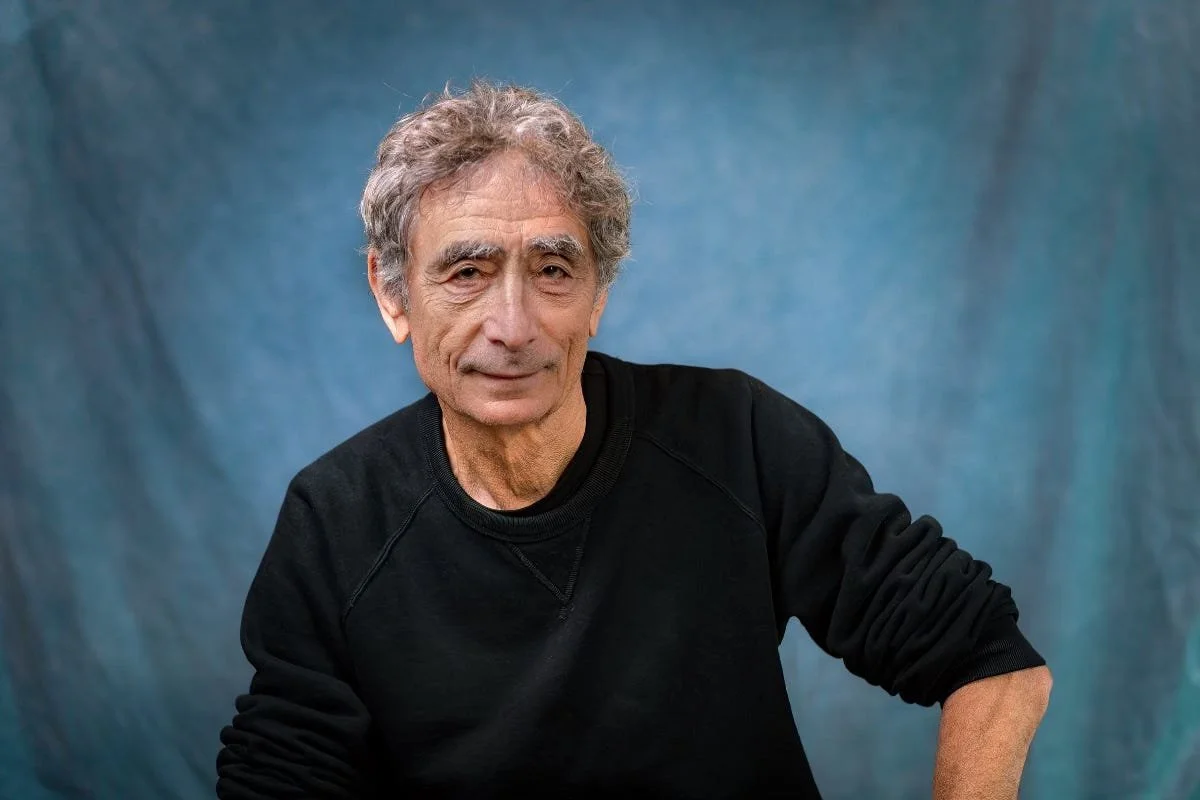
Dr. Gabor Maté (Credit: Onassis Foundation)
Maté primarily looks at this reality in the context of addiction, but he also relates that experience to the lives of those suffering from Obsessive Compulsive Disorder. There is a growing body of evidence to establish that there are similar neurological things going on between the two conditions, primarily to do with the functioning of the ability to make rational choices. Early trauma or pain, very often associated with addiction especially, may cause brain centres responsible for making decisions to be damaged or to develop only partially. Interestingly, this function is not so much about making a selection, as it is about excluding risky or negative choices, very rapidly, almost unconsciously, and landing on a safe or positive choice.
In addicts and OCD sufferers alike, this function is very often impaired, with a resulting higher likelihood of making damaging or irrational choices and decisions.
If this is true - and the science is well-established at this point - then it stands to reason that we are all living on that scale somewhere. The manifestation of it in your life may vary, and it may not be extremely dangerous intravenous drug use in your life, but if you want to understand why you keep going back to behaviours that feel good in the moment but keep you stuck in something that isn’t helping you achieve your goals or live the life you want to live, then this might just be as good an explanation as any.
And if you were in any doubt as to the stakes (“my thing is just a bit of fun, it’s not that serious”) - remember we’re talking about freedom here: arguably the highest expression of human achievement.
>><<
What emerges is a connecting thread from emotional regulation (which requires overcoming what Daniel Goleman called the “amygdala hijack”, when the fight-or-flight responses activates in response to some external threat or stimulus - and regaining our ability to respond to that threat in a rational, collaborative way) to living a free life.
Controlling outbursts of anger.
Suppressing urges to spend or drink or stare at other people’s lives on social media.
Walking away from habits that give us a short-lived boost but keep us stuck where we don’t want to be.
And instead choosing human interaction and real connection with a living, breathing, sentient, empathic, interesting fellow member of our species. Leaning into the tough moments and seeking to understand over being understood. Observing our emotions and choosing which ones to show publicly. Choosing the best outcomes we can from every situation life throws our way.
In short, choosing the hard pauses over the easy ones.