
Even if only one person reads this, I'll still feel great. On usefulness: and why I think it's really all you need in this life.
This weekend, we helped my brother-in-law and his wife move house. Or at least, we got them 80% of the way there. They’re moving into a fully renovated home and the only thing that was really ready was the garage, so all their worldly possessions are now in precarious piles at an undisclosed address.
They’re moving out of a two-bed apartment so don’t have all that much stuff. No massively bulky furniture. No years of accumulated sports equipment or an unnecessary number of bikes or multiple king-size mattresses. It more or less fit in one 15 foot U-Haul.
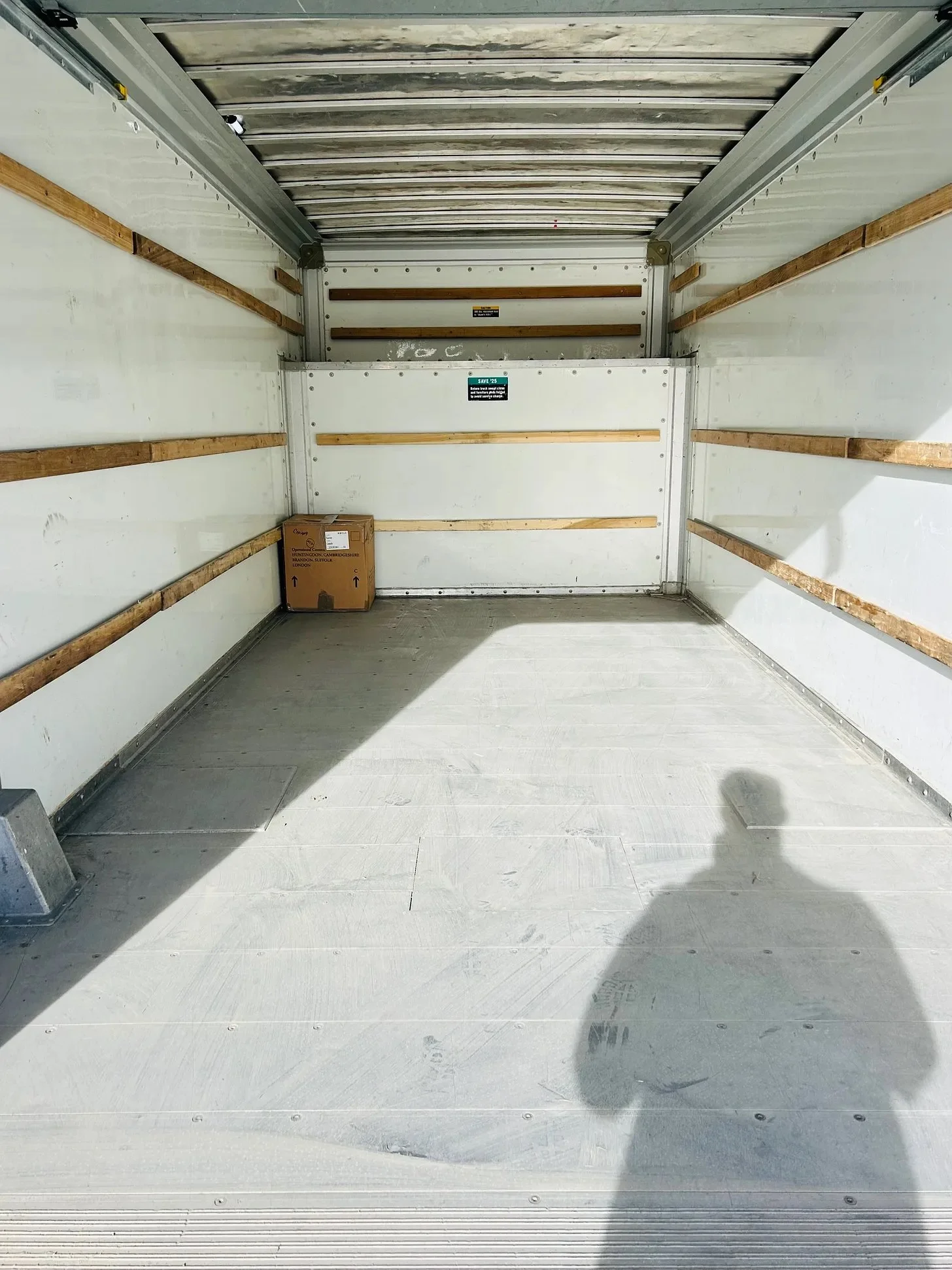
The first box (of many) goes in the U-Haul.
Even so, it took quite the crew to get it done. Four grandparents, four brothers, two sisters, three friends, and the odd second-grader, and still it took a whole day. There’s a lot of work. Not just lifting boxes, but babysitting, ordering takeout, driving the truck, cleaning the floors when it’s all done - it truly takes a village.
And moving just…does. Whether it’s around the corner or around the world, it’s the same amount of work. Just look around you, if you’re reading this at home, at all the accumulated detritus of life, and now picture putting every. single. item in a box.
It’s a lot.
But being part of it felt great. Why?
Because being useful always - always - does.
»«
A lot of the bad things we experience in our lives come from not feeling useful enough.
Not feeling useful enough - at its most extreme, a feeling of uselessness - is an accurate predictor of many common mental health issues. Spend any time in addiction recovery meetings and you’ll hear a lot of stories about negative self-talk, and, in particular, the feeling of being worthless or useless. That feeling keeps addicts in their addiction: that’s how powerful it is.
There is also a strong, bidirectional, negative correlation between depression and purpose. That is, lacking a purpose feeds depression, being depressed fuels purposelessness. Finding a useful purpose is often a significant factor (although rarely the only one) in moving forward from depression.
Burnout, especially in a corporate setting, often derives not from the quantity of work, but from the nature of it: flogging yourself without really being bought in to the purpose behind the work (if there even is one) is a sure way to spiral; whereas I know a lot of people who work all the hours God sends, but love it, feel great about it, and never get anywhere near burnout. The difference? The sense of purpose - the usefulness - behind the work.
All of this feels obvious, but there is something more at play.
How do I know? Well, this weekend, helping my brother-in-law and his young family move house, felt great. But did it mean that my entire life is suddenly in order?
No. Of course not. My business is still like a neurotic houseplant that responds incredibly well to certain things, and wilts at others, seemingly without rhyme or reason. I love my kids but they still suck the life out of you sometimes (I really do love them). And I have aches in these 42-year-old joints that I can’t put down to anything other than age.
But the experience of being useful is still so powerful. Why? Because it is a distraction from our problems. It takes the mind away from the things that weigh us down, and reminds us that the human brain is capable of generating simultaneously conflicting feelings and emotions. You can feel great and tired. You can feel positive and worn out. You can feel stressed and energised.
The thing I think we all have to realise is that it’s ok to be distracted from your problems. This goes against the grain, I realise. Modern wisdom requires permanent emotional activation and feelings analysis in real-time, 24/7: If you’re not feeling all your feelings, then make sure you put another ten bucks in the therapy jar. Be prepared for it to resurface as a monster in a year’s time. Avoid it now, pay for it later.
Now there’s probably something to that. But I refuse to believe that a positive, useful distraction from a struggle we’re living through is a bad thing.
I can’t speak for anyone else. But my experience has consistently been this: if you’re really battling with something, then walking away from it, doing something else, and then going back to it when you’ve had a chance to reset often makes that problem feel smaller, more manageable, and less intimidating.
So doing something useful is a healthy distraction from life’s daily challenges.
But so do other things. So what is it about usefulness specifically that I think is so important?
It took me a long time to find the answer that question myself. But then one day I was working on something for one of my group sessions, deriving partly from Maslow’s hierarchy of needs, and I realised that usefulness had a role to play in every single one of the levels in that model. It very obviously feeds the highest needs in the model (self-actualisation and esteem); it fosters love and belongingness (level 3); usefulness makes others feel safe (level 2) and usefulness at its most functional is a clear driver of the most basic needs of level 1: shelter, food, water, rest.
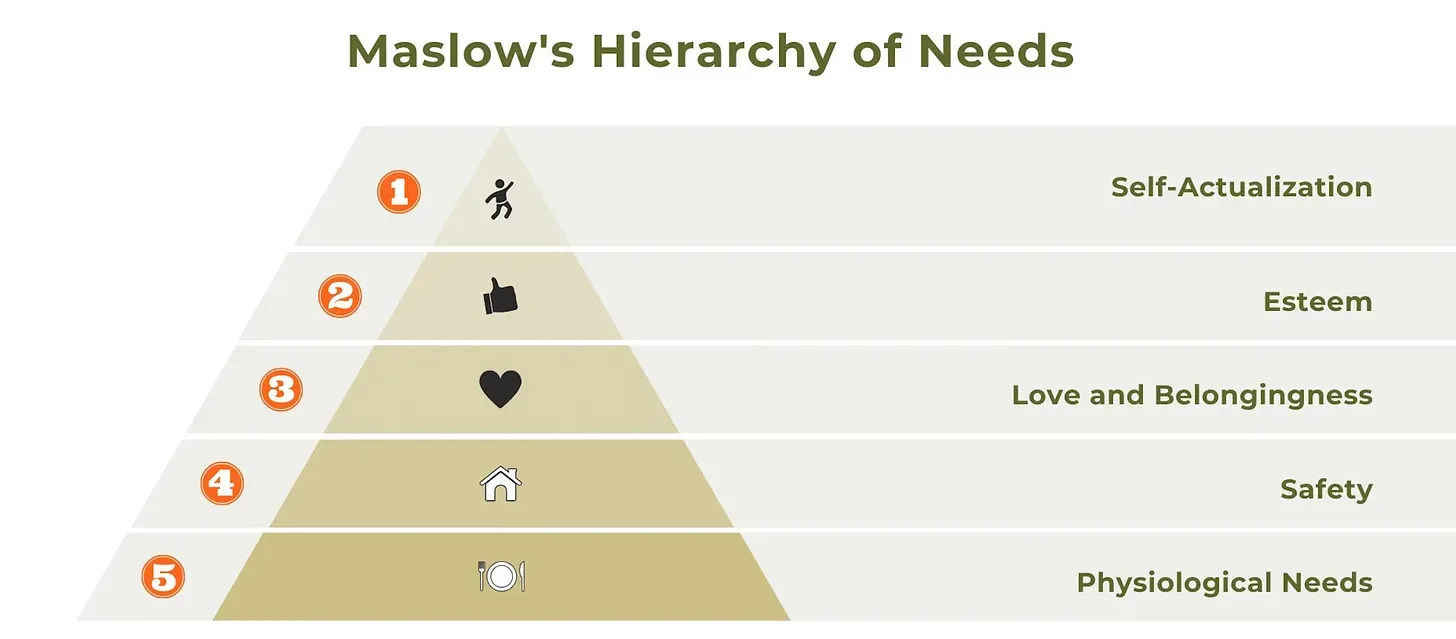
Put another way, usefulness transcends the hierarchy of needs.
Which is very significant, if you think about it. All you have to do is find something useful to do, and all your needs will be met. Simple, right?
Well, no. Not quite. Because in this world, a lot of things get in the way.
I think there are two things you need in order to be useful to others:
Headspace and
Community
And today’s world is pretty much designed to remove both of these things from your life.
We are so busy. Pulled in so many different directions. You open your phone to track a delivery you’re expecting, and end up scrolling social media for 45 minutes because someone sent you a message and the feed showed you that funny cat video and then you forgot why you were there in the first place so you shut down the app only to notice that seven of those groupchats you never asked to join are blowing up and your workout app hits you with a reminder to move and…you get my point.
How are we supposed to hold onto headspace in that context?
The second thing is community. The truth is, for a lot of us, our work colleagues are our community. They’re the people we spend most of our time with. But we didn’t choose them. They don’t have our backs 100% of the time (at least not in most companies, great if yours do). They all have their own agenda and every company has politics and so I think it’s a problem if this is really where we’re getting our community.
Now I’m no anthropologist, but do you really think prehistoric humans sat around and watched each other trying to light fires and build shelters? No. They helped. A couple of years ago I visited Mesa Verde National Park in Colorado. The ancient petroglyphs there tell stories of clan identities, migration stories, and shared spiritual beliefs. All things that define and bind communities.

The petroglyphs, Mesa Verda National Park (credit: nps.gov).
So community is without question an ancient need we have as humans. And modern society tends to make true community (one where you build a common identity, move together, and live out shared spiritual beliefs) very hard to find.
(Side bar on this: if you’re in a community, and you’re not sure if it’s the right one, ask yourself two questions: one, is it competitive, or collaborative? Private members’ clubs can be a bit of both. Workout groups too. The further toward the collaborative end of the scale you can get - where you all win, everyone builds everyone else up, willing the success of the other, often in the name of a higher purpose - the more it will feel like a real community. Secondly, is there any gossiping going on? If so, that ain’t it. Sorry).
So there it is. Headspace. Community. Usefulness.
»«
I realised recently that usefulness has become a very intentional part of what I do with my time. It really drives everything I am building with Blazing Pine. Sometimes it gets in the way: a desire to be useful does not always go hand-in-hand with a commercial approach to business development. But I’ve decided I just don’t care.
Because nothing - nothing - feels better than being useful.
So if you’re feeling a little stuck, a little lost, or just a little low, put your phone down. Clear your head. Find a community to pour yourself into. And through that, find something useful to do for someone else. Volunteer. Shovel snow. Make a meal. Make an introduction. Make an effort.
I promise you it will feel great.