
Leaders: if you feel like you’re being held to an impossible standard, you’re not alone, and it doesn’t have to be this way. Dismantling the cult of leadership, and why we need a return to character
The fetishisation of “leadership” has gone on long enough.
If you want to know where today’s workplace imposter syndrome epidemic comes from - and it is an epidemic, you’ve experienced it, you can admit it here - look no further than the indigestible banquet of leadership messaging we have grown so used to being fed. Just a few recent LinkedIn think pieces:
“Choose humanity over performance”
“…how important it is to lead with intention, awareness and integrity”
“Leadership Isn’t About Leading People — It’s About Serving Them Until They Don’t Need You” (credit to ChatGPT for that one I reckon).
Right.
So I’ll just make sure that full-time, no slips, I’m cutting everyone some slack, being “intentional” (don’t know what that means), being aware that I’m leading, serving my team…AND keeping my boss happy because s**t’s actually getting done.
Oh and I’ve also got to teach. But not in a teach-y way, in a coach-y way. And I’ve got to sacrifice my needs at the altar of my team’s needs. But still get my job done. And I’ve got to make people feel great, create safety, master my emotions, and make it home in time to read the kids a bedtime story.
And what happens when you try to live up to this standard?
You fail. Because it’s impossible (don’t @ me, I have too much proof).
What else happens? Well, you feel like crap, because you failed, and not just once, but over and over again, because the story you tell yourself in your head is that this is what you are supposed to be doing and you have created an entirely fictional picture in your head of some kind of biologically- and chronologically-impossible offspring of Mother Teresa, Abraham Lincoln, Winston Churchill, and MLK Jr. and WHY CAN’T I BE LIKE THAT.
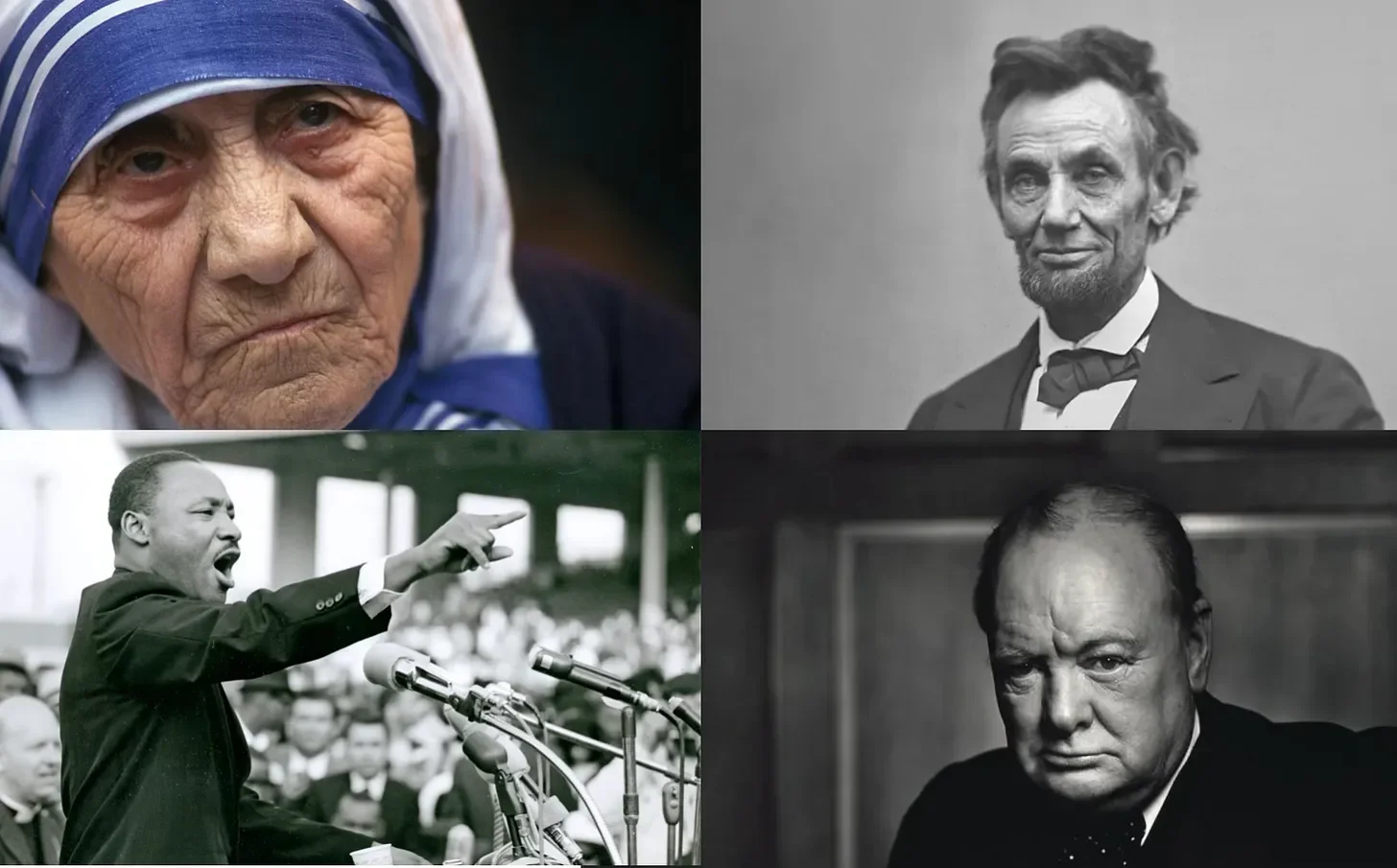
Just do what they did, easy.
That feeling looks a lot like imposter syndrome. “I’m not at that level; I don’t belong here; I’m faking it”.
How do I know this?
Number one, I’ve experienced it. Spent years trying to be a “better” leader. Never felt great. Do great leaders exist? Yes, of course they do. But not because they managed to live up to someone else’s standard - but because they created their own. More on that later.
Number two, literally every single one of my clients has experienced or is experiencing it.
Now I’m lucky enough to spend a lot of my time talking to successful, confident, smart people. Achievers (although they wouldn’t all describe themselves that way). People who have “made it” in their careers. They’ve reached the upper levels of their profession. They’re making good money. They take the vacations they want to take. They have choices. Options. Can more or less live the life they want.
That’s how it looks from the outside anyway.
The truth is different behind closed doors (or in a private Zoom call).
In the sanctuary of a coaching session, outwardly charismatic, intimidatingly successful and confident people completely flip. The emotion comes out. Sometimes tears, sometimes frustration. Occasionally resentment. Often exhaustion. And always, always always some form of negative self-talk.
(Side note: I can’t name them here, but these people are real, and if you want to check on that, I can definitely introduce you to one or two of them. Just get in touch).
Usually, the next thing to happen is we talk about the pressures of leadership (often self-imposed). The stories we tell ourselves of this mythical standard we’re supposed to be living up to.
The need to get everything done, all of it, and still keep your head, and motivate others, and be close enough that you know what they’ve got going on, but distant enough that you could let them go one day. Approachable enough that they can come to you with any problem, but remote enough that they grow and learn and develop independently.
No.
Stop.
That’s not how it should be. At all.
So what’s the answer?
Well, I’d be lying if I said I knew. But I have a couple of ideas, based on several years’ worth of market research - aka, talking to leaders who are tired, and tired of being tired.
First and foremost, the answer is YOU. If you want to be successful as a leader, you have to be YOU. You and only you. Not someone else. Not Steven Bartlett or Alex Hormozi or Arianna Huffington or Sheryl Sandberg.
They’re all great. But the only thing you can learn from them is how they made it. Some of that may apply to you.
A lot of it won’t.
Because they are them, and you are you.
So the first question you might ask yourself is - what does it mean to be you?
What are your strengths and weaknesses?
Where keeps tripping you up?
What is your thought life like?
What does success look like for you?
How does your brain work? Are you all about people? Ideas? Process-driven? Obsessed with facts and evidence?
And from there, what does your version of leadership look like? What do people look to you for? What do they admire about you? What stops them from coming to you? Where are your blindspots?
This is where the work that needs to be done starts.
Bartlett and Hormozi and Huffington and Sandberg and Lincoln and Churchill and King and Mother T all did it. I promise. They probably used different language. But I guarantee you, they went through some level of self-interrogation before they decided they were ready for the world.
Lincoln was famous for cross-examining his own ideas. Churchill did the same. King advocated for self-analysis to draw out unhelpful thoughts and ideas. Mother Teresa’s internal questioning - in contrast to her public faith - only became known after her death, but it was a real driving force in her life’s work.
For all the others, well you can just check their LinkedIn.
What comes of this work? Well, the main thing is you’ll just know yourself better, and that’s never a bad thing. But it will also allow you to figure out what matters most to you, and where you should direct your talents and abilities.
Because one of the unpopular things to say about how leadership has evolved is that in the past, we admired leaders for their character. Today, we admire people for their morning routines and their snappy soundbites. Leadership has become a curated identity we perform online, when in the real world, we’re struggling.
The problem with this is when we fetishise leadership as 5am workouts and think pieces on LinkedIn (ok, hands up, little bit guilty on this one), we create a standard that not only is impossible to live up to, but rapidly becomes undesirable to hold.
After all, how many people can you think of in your world who hold leadership positions just because they wanted to lead, not because they have the right skills?
Because the people with the right motivation realise how tough leadership is, and what it actually takes to do it well. Humility. The ability to listen. Patience. Self-interrogation.
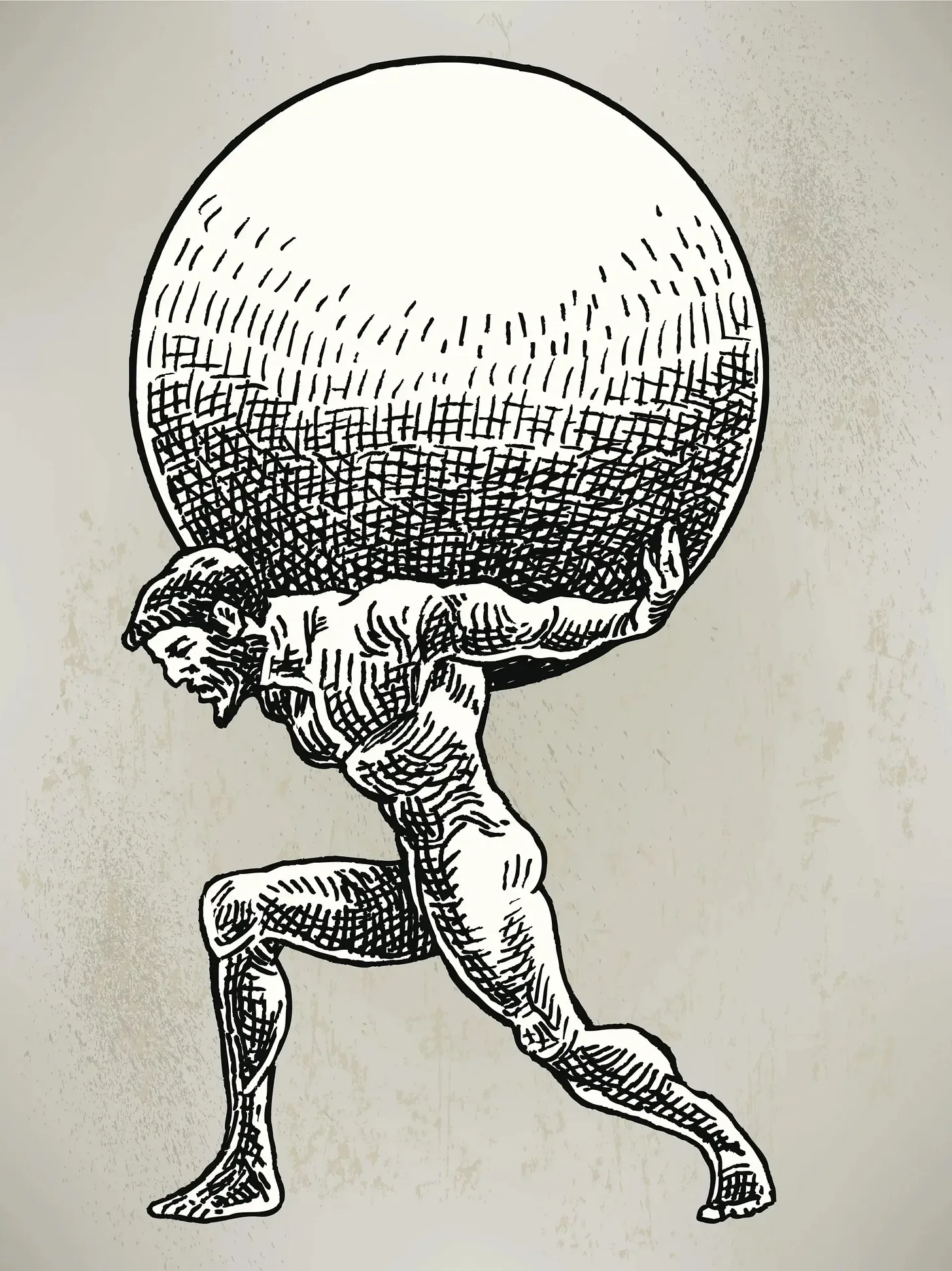
“Just finishing a few emails, setting a vision for the next five years, doing some wellness checks on my team, and curating an environment of emotional safety”.
And an ability to recognize that “becoming a leader” is not the goal.
Being yourself is the goal.
So stop trying to live up to some unattainable and unsustainable standard of “leadership”. Instead, be yourself.
Lead yourself first. Then lead others.
And after all that, you might just find you’re a great leader after all.