
Leaders: your people just need a place to talk.
Trigger warning: this article contains split infinitives and em dashes. For the avoidance of doubt, all of it - every word - was written by a human.
I’ve been thinking a lot recently about what it is to be useful.
The more people I speak to and the more I hear about how people are doing - in their careers, in their relationships, in their thoughts, in their sense of self (and yes, we touch on all of these in a healthy coaching relationship) - the more I see a single common thread tying all of these things together: that good feeling that comes from being or doing something useful (and the bad one that comes when we aren’t).
At a family wedding a few years ago I was catching up with a cousin of my wife’s who we hadn’t seen in some time. “What is it you’re doing for work right now”, I asked him. And I fell completely in love with his answer:
“I build barns”, he replied.
I.
Build.
Barns.
In three words, he could communicate everything I needed to know to be able to understand his job.
In three words, I could know who is doing the doing (“I”), what they are doing (building), and what the result is (a barn).
And in three words, I knew that he was fulfilled by purpose in his work.
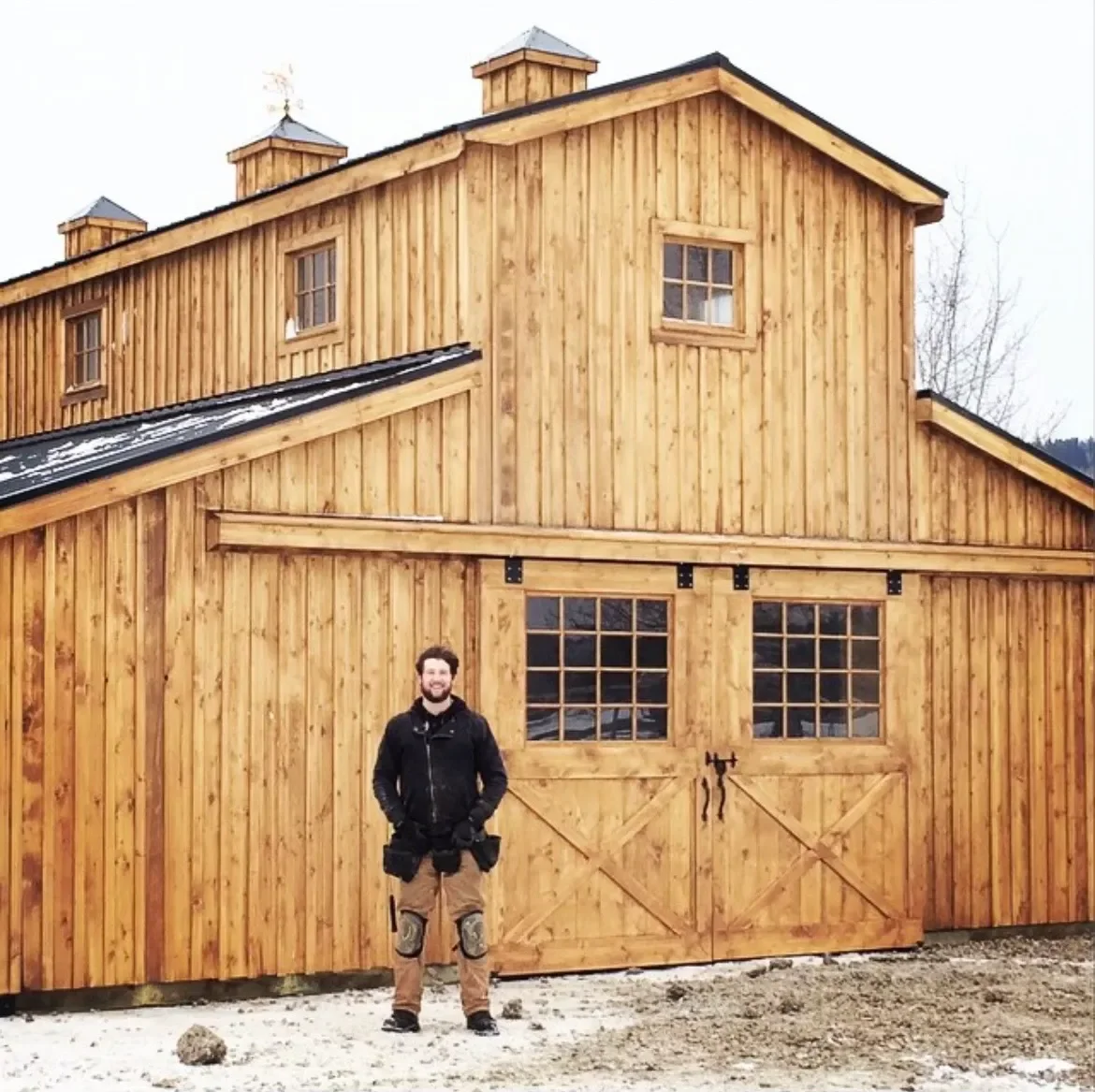
Tyler. He builds barns.
Compare that to your average knowledge-economy corporate role (something like, “Essentially, I integrate the current export drive / And basically I’m viable from ten o’clock till five” - @Johnny Betjeman, the greatest) and the beauty in its simplicity becomes apparent.
I build barns.
Now, let me be clear: I am not hating on corporate roles. I inhabited that space for 12 years, and the majority of that time was spent (I hope) in a worthwhile direction, usually, improving either the efficiency or the bottom line of my employer. But to anyone outside my world, it was difficult to concisely say exactly what I did. What actual physical tasks I spent my time on that brought about a supposedly valuable result. And I don’t think I was (or am) alone in that feeling.
So what’s the gap?
Well, assuming you would be as interested to hear more from the barn-building cousin as I was, how easy is it to come up with a ton of follow-up questions to his statement? What kind of barns? What materials do you use? How many in your crew? What kind of customers do you work with? How long does each one take? All with a really clear, tangible idea in mind of the product and its application.
Because “I build barns” is ultimately a statement of utility. The one follow-up question you would never need to ask is: why?
And I think a lot of people in the corporate world struggle - in their innermost selves - with this notion of utility, and the “why” behind what they do. It explains the fact that a lot of folks reach a point in their career where they’ve been very successful, they know they are competent and appreciated (usually because they continue to be employed, and are paid well); they have good relationships with the people around them and they have developed a huge variety of complex, subtle, and even unnameable skills, often without even realising it.
But they don’t feel as fulfilled or as purposeful as they would like to. They don’t feel as useful. Why? I think one of the big reasons is that, away from their daily context, they can’t easily explain what is useful about what they do.
Yet the work they do is useful. They have just never taken the time to fully understand their unique contribution to the usefulness of that work. It’s just emerged organically over time, and now they feel detached from it.
I know you know what I’m talking about it.
You know that feeling in yourself (most of us experience it at some point in our career). But I would argue that it’s just as important to recognise it in others, too - especially in the people you lead.
A few case studies to illustrate my point. These aren’t real client stories, but they might as well be. If I aggregated a few partnerships I’m involved in right now, it would look a lot like this.
Your top firefighter - the go-to person who always takes problems away, fixes them, and even leaves things better than they were before - gradually starts to lose their mojo. Their energy disappears. Their regular patterns of work change. You notice behavioural changes - moodiness, disaffection, increasing cynicism.
Effective leaders start to be distracted by shiny new projects that don’t really affect them and look to get involved where they’re not needed. Their good reputation starts to decay as they become known as a meddler. They look bored. They contribute less and less in meetings.
The centres of excellence in your organisation - the ones that are known for bailing the company out of a serious market or operational issue; the ones that have left all the other commercial divisions in their dust in either profitability or growth; the ones that have innovated at a faster rate than the rest of the business - suddenly stop producing.
As a leader, you need to be on the lookout for the people in your area whose attitude or behaviour starts to resemble any of these situations. And before jumping to any conclusions, ask first what might be going on behind the scenes.
Because these are not people you want to lose.
And it’s surprisingly simple to avoid that fate - though if you do nothing, you can guarantee that you will “lose” them - either they’ll quit, or worse, they’ll stay, but totally disengage from everything that made them good. Ultimately, same result.
I’ll shortcut to the answer: people just need somewhere to talk freely about work, without consequences, and without filter - but with a productive, constructive, objective. And when I say ‘people’, I mean EVERYBODY. Everybody needs it. You. Your boss. Your team. Everybody.
(Side note: I’m sorry, but if you’re in the process of hiring an internal coach, you’re going to be disappointed. Nobody will trust them. Especially if you attach them to the HR department. Sorry HR, nothing personal, I’ve been there.)
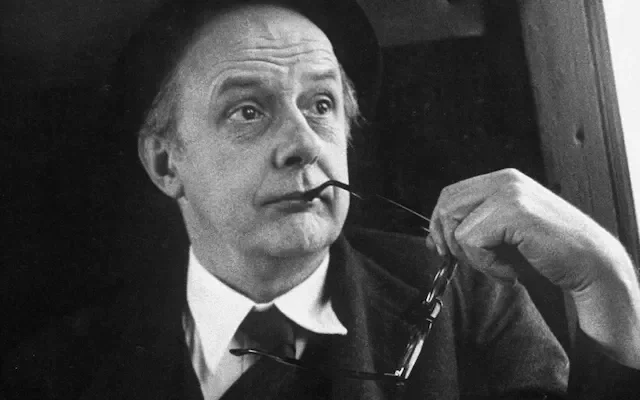
John Betjeman. Knew how to lampoon non-usefulness. Picture credit: The Telegraph
No. If you’ve got talented people and you’re worried about them, they need someone they can talk to who is outside the organisation, who has experience with their situation or with helping people in similar situations, and who can help them work towards a constructive outcome in that situation.
In other words, they need a coach.
Of course I would say that. It’s in my interests that more people get more coaching more of the time. But more than that - it’s in their interest. I truly believe that. Because it’s what?
Because it’s useful.
And that’s not just my opinion. I’ve seen good things happen out of bad situations, time and again, just because the person in that situation had a place they could go to break it down, vent, redirect that energy, and move forward in a positive way.
In a useful way.
Because ultimately, everybody wants to build barns.
Everybody wants to be useful.