
Carry your own baggage: Because if you don’t, the top won’t feel like the top
This week I’m going to share three stories with you.
Like all good stories, these ones have a beginning, a middle, and an end.
They have a good guy (my client) and a bad guy (nameless, faceless corporation). They have narrative tension.
And - spoiler alert - in all three cases, they have a happy ending.
When I was mapping out how I would tell these stories, I found myself thinking about a hike my wife and I took back in 2017. We were living in Singapore at the time, and Nepal didn’t look so far away, so we decided to embark on the Annapurna Base Camp hike, a nine-day there-and-back-again trail from Pokhara at 800m above sea level, all the way up to the base camp at just over 4000m.
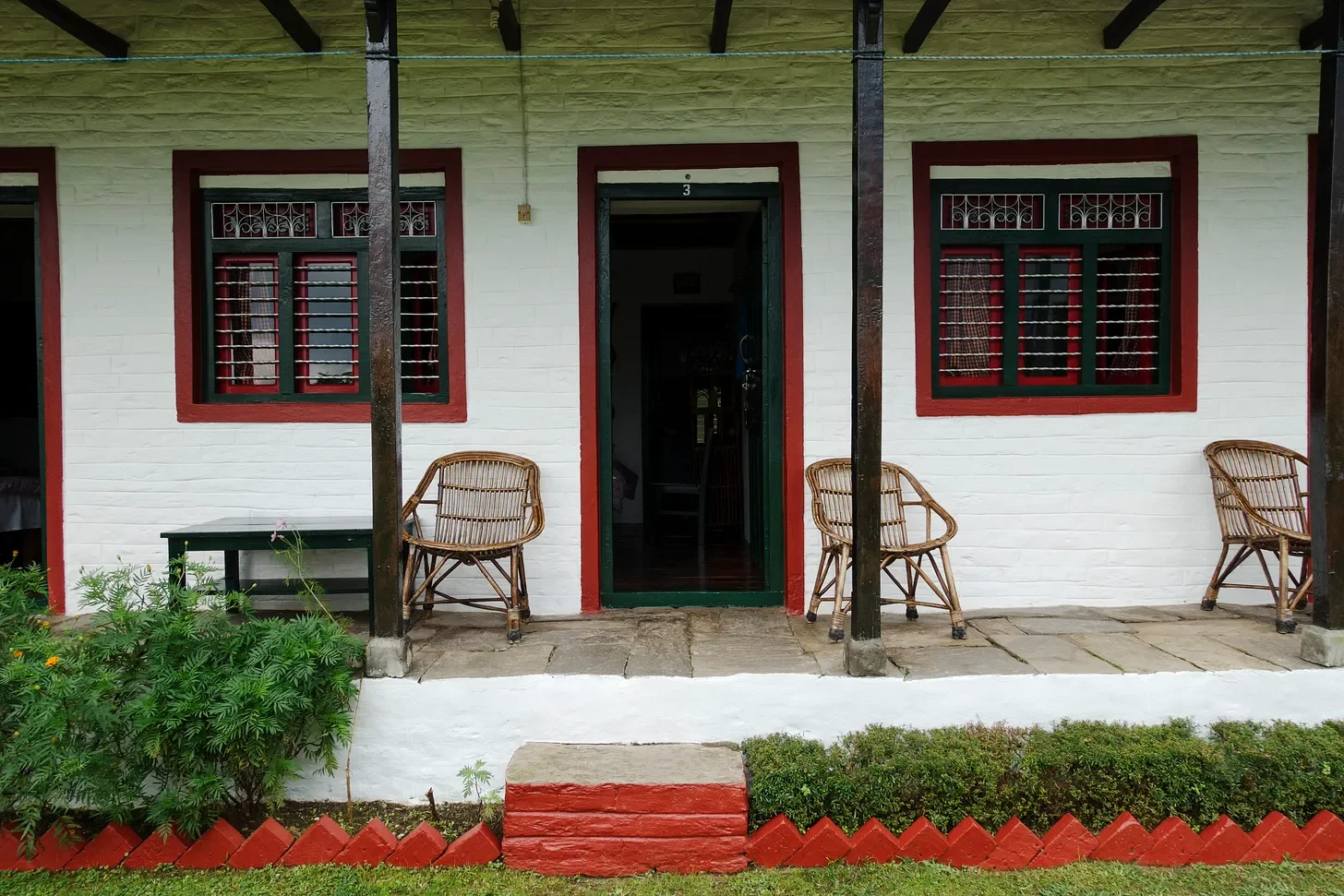
The Gurkha Lodge, somewhere on the Annapurna trail
The trek is, unsurprisingly, spectacular; unbelievable views everywhere you look, characterful little teahouses and lodges, including one we stayed in on our first night run by retired Gurkhas. It was actually closed when we arrived, but we were nevertheless given a room and a big bowl of goat curry. Pictures of the British actress Joanna Lumley at a get-together of Gurkha VCs on the wall. The whole place painted in the regiment’s red and green. It was atmospheric to say the least.
The terrain on the hike is varied, from bucolic Nepali pastoral low down, rice paddies and basket weaving, climbing through an unusual mix of bamboo and birch forest, interspersed with thickets of rhododendron (sadly not in bloom when we were there). Big fat juicy grasshoppers and dragonflies like Huey helicopters. Dozens of varieties of butterflies, enormous lacewings and swallowtails and tortoiseshells and something turquoise I don’t know the name of. Tree crickets screeching to each other like slipping fan-belts. And, the higher you go, exposure and intensely bright sun and deep blue sky and the chaos of the Modi Khola gushing down the valley, white water and white noise. The trail winds through villages which, despite the popularity of the trek, had somehow retained a local feel. This doesn’t mean there isn’t some opportunism of course - chains of schoolchildren linking arms across the width of the track, singing you a song, then demanding chocolate, for example.
And then the “top”: Base Camp at 4,100m, we arrived on a Thursday at about noon, just before the afternoon clouds rolled in, only slightly more breathless than usual. You’re surrounded on all sides by a natural amphitheatre of 7000m+ peaks, the most beautiful of which (in my humble opinion) is Machhapuchhre, a comparative midget at just under 7000m, and Annapurna 1 itself, over 8000m, and of a scale impossible to describe.
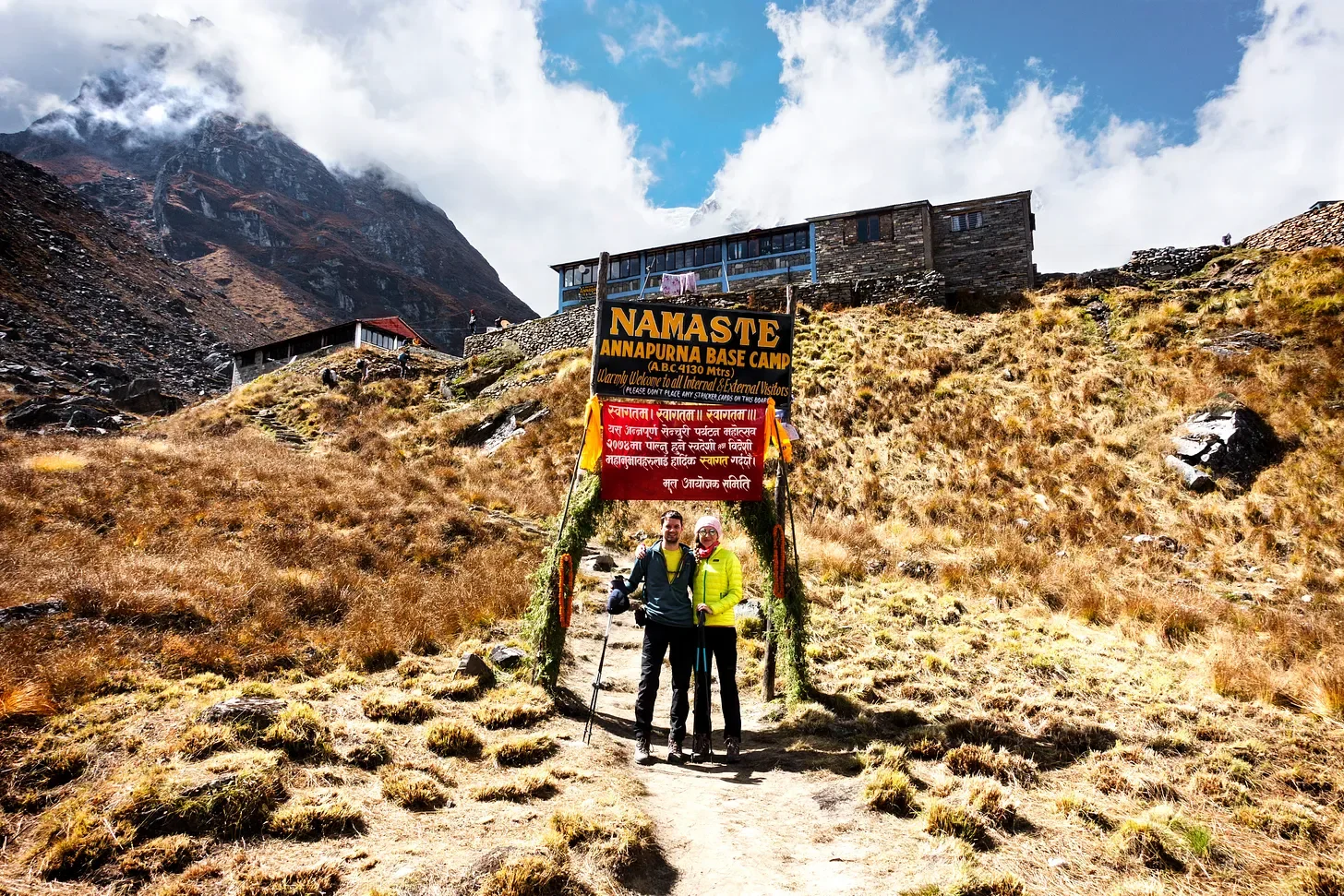
At Annapurna Base Camp, October 25th, 2017
The other thing about this trek is that despite being so popular, with hostels and restaurants in most of the villages you pass through, once you leave the safety of Pokhara at the bottom, there is very little else in the way of support.
If you get in trouble, you’re on your own. There is nowhere to buy supplies; everything you need you must bring with you. And as for luggage - I’m finally getting to the point of this story - you have a choice: either make the trek under your own strength, or paying a porter to carry your bags for you. But in my book, the only way you can truly say you did the hike is if you carried your own load.
Now what has this longer-than-intended digression got to do with my three stories?
Well, they all have something to do with a struggle. Some difficulty or challenge. In each case it’s slightly different. I’m going to describe them as corporate bear traps, because that’s what they are. But all three stories have one thing in common: the lesson that it is only by carrying your own burden, and taking responsibility for moving forwards, that you can claim to have overcome the challenge it represents.
My first story concerns a client I’ll call Melissa.
Melissa was a highly successful junior leader in her company. She ran customer accounts and exceeded expectations in almost every area. And, as a result, she was promoted. Promotion in her case meant she was given:
a new title;
a bit more money
a lot more of the same work;
the same resources to work with;
targets that showed her company expected the same results.
Essentially, her load was increased, but the support she was given was unchanged. When she and I started working together, her superiors were wondering - Where did she go? What happened to those incredibly happy clients? Meanwhile she was on the brink of a burnout, and effectively asking herself the same question - what happened to me? I was doing great, now I’m on the brink of collapse - how?
Of course, nothing had happened to her. She was the same person with the same motivation, the same intelligence, and the same discernment. And yet she had fallen into the first of our three corporate bear traps: the trap of being expected to continue to win the game when the rules have changed (but nobody told you).
The thing is, employers do this. They always have, and they always will. They will rarely not give you work because you’ve already got too much. Most of the time, what happens is that the most effective people continue to collect work until they become ineffective.
So what’s the happy ending? Well before we go into that, there are two more stories to tell.
My second client story is about Jordan.
Jordan was a long-standing high achiever within his company. One of those people who had a positive reputation across the whole business. He was known for having led the resolution of a serious crisis within the organisation, one of those “saved the company” situations.
So his stock was high. He occupied a senior leadership role. He had influence and autonomy. But due to his success in his role, he was being kept right where it suited his employer, and inside, he was growing increasingly frustrated and purposeless. The question he had most in mind was: “what’s this all for?”.
This manifested itself in surprising ways. Normally known for his mature and measured communication style, Jordan became irritable and argumentative. People noticed. His reputation began to suffer.
So this is the second bear trap: being so effective in a role, and having not paid enough attention to succession, that you become stuck, you begin to underperform, and you are held responsible for your own failure.
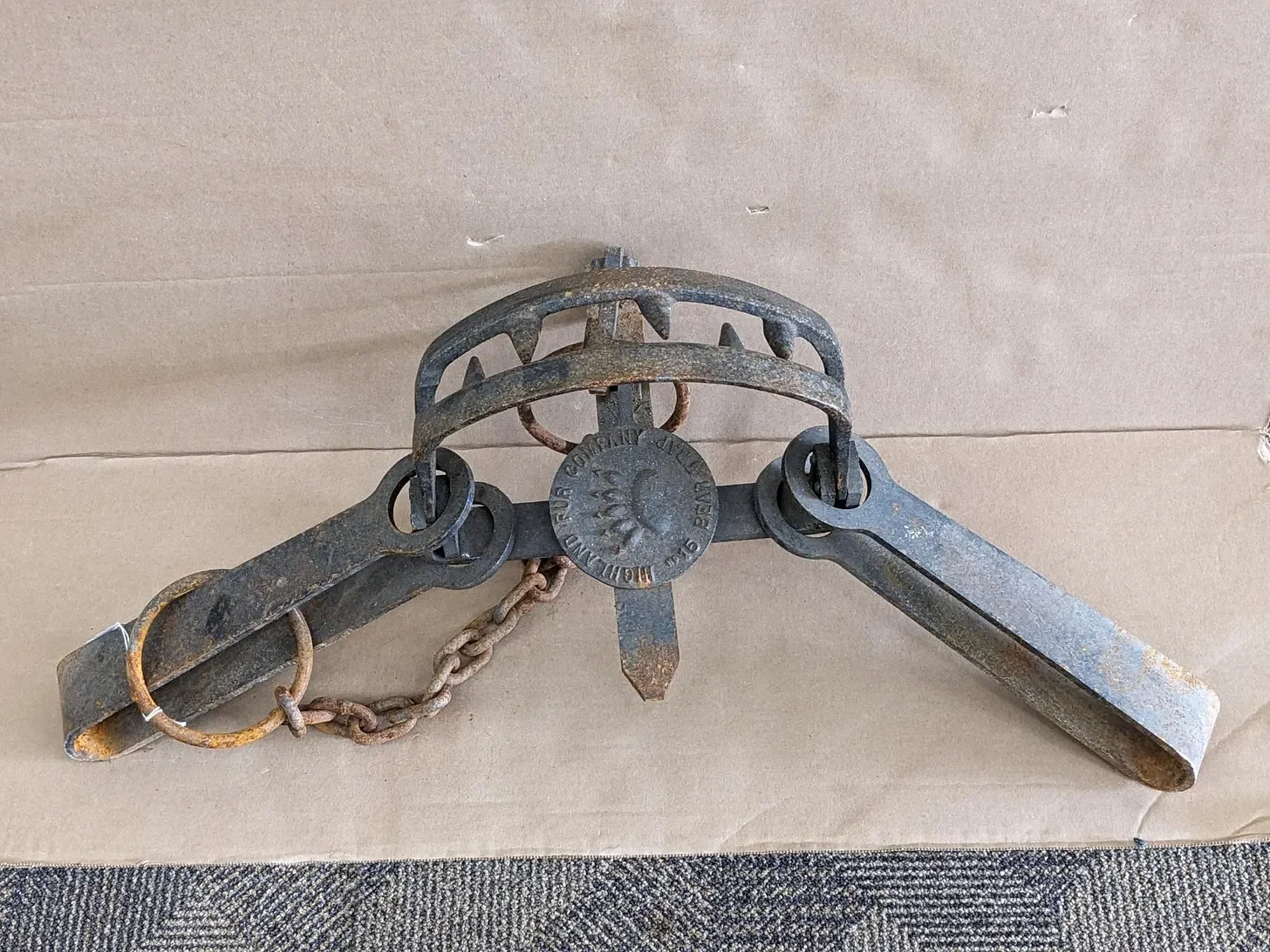
A bear trap. The corporate variety hurts just as much, but in different ways.
Story three is about a client I’ll call Erin.
Erin was a relatively new leader, promoted to a role with a significant jump in responsibility. She performed well, did a lot of work on imposter syndrome and establishing authority and owning her new position. She made a strong start in the role and impressed her superiors.
Then this new project came along. A real political hot potato. The kind where disagreements emerge right from the beginning, warring factions establish themselves, everyone starts to believe they have to pick sides - and that’s only for deciding who runs the project.
Very quickly, a big, ineffective, unsustainable mess emerged. And of course, progress with the project was close to zero. In her new position, and having established her credentials, Erin was asked to step in to remove the logjams, get everyone talking, and move the project forward.
The problem is that this particular task required a skillset that is the complete opposite of Erin’s core strengths. She is obviously highly competent and has many skills she can lean on to solve problems. But at her core, she is a relationship-builder. She works best in harmony with others.
The opposite of that style is highly data-driven. Decisions are made based on facts and evidence, with little consideration given to human emotion or team cohesion.
And this situation she had been asked to fix was riddled with disharmony. Infighting. Arguments and petty squabbles. And this is where we find the third corporate bear trap: being set up to fail due to a total lack of consideration for where you are most (and least) effective.
In this situation, Erin ended up, unsurprisingly, in a stress response, cortisol and adrenaline spiking, the sympathetic nervous system permanently activated - the classic fight or flight scenario.
So what do we learn from these three stories? Well, I’d point to two things:
Number 1: it’s nobody’s fault. This is how organisations work. They always have, they always will. You will almost certainly, therefore, find yourself in at least one of these three situations at some point in your career.
And Number 2: it’s up to you to dig yourself out. Nobody is coming to save you. These scenarios are tests of you ability to continue to evolve and develop in your career. Overcoming them is how you see further progression. And you have to look hard at yourself and work out the best way forward.
So what does that look like?
For Melissa, the work involved a few different approaches. She had to get better at delegating. She had to get better at managing expectations upwards. And she had to give herself and her team permission to accept that perfection was unrealistic.
For Jordan, there was a pressing need to reset some behaviours that had emerged, and that he knew did not serve him. He had to balance his need for progression and change with some patience and clarity of communication of his expectations. He had to demonstrate that he had increased altitude in his decision-making, that he wasn’t operating for his own function but for the business as a whole.
And for Erin, she had to identify and name the skill gap, and work on trying to fill it. In her case, that meant firstly bringing some data into the decision-making process to complement her own relational style, and secondly, asking support from people whose skills worked in tandem with her own.
The key is this: all three situations required resilience, introspection, self-awareness, and the humility to accept that development starts by asking yourself some hard questions. What have I done to bring about this situation? How have I contributed to my falling into this particular bear trap?
A career is a lot like a long hike. Ups. Downs. Muddy bits. Dips in energy. Periods where the view takes your breath away. Other times when you’re just looking down at your feet, trudging along. It won’t always be easy. You’re going to pull the odd muscle.
But you have to keep hiking. It’s the only way to reach the top.