
Purpose: What it is, and how everyone is looking for it.
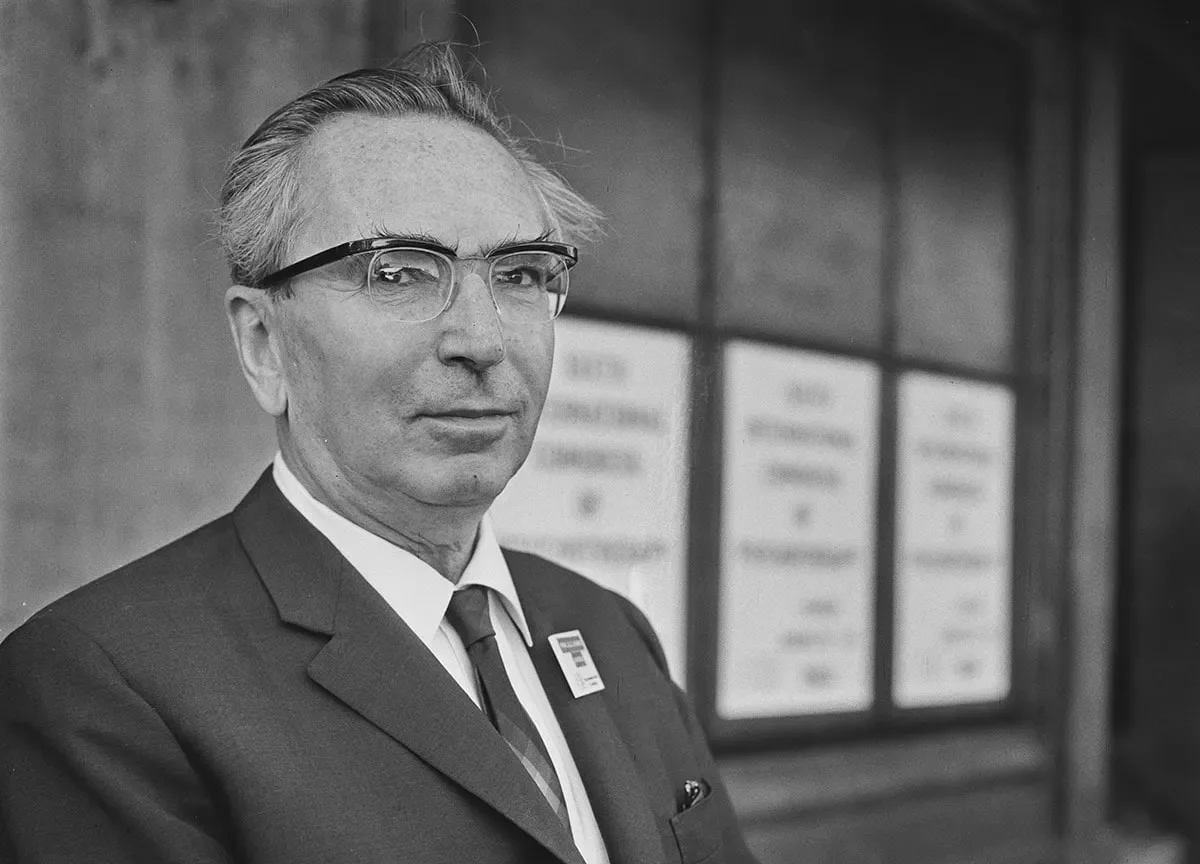
Viktor Frankl
This is first of a two-part piece. Part two will follow next week.
“Everything can be taken from a man but one thing: the last of the human freedoms - to choose one’s attitude in any given set of circumstances, to choose one’s own way.” - Viktor Frankl, Man’s Search for Meaning”
Last week I posted some data about my coaching work.
I’m not much of a data person, usually. It’s a weakness of mine, in some settings. In others, I suppose it’s a strength. After all, not being one thing, as I often tell my clients, usually means being something else. In my case, not being particularly data-led is why I’m more of an intuitive decision-maker (probably also a big part of why I left banking, but that’s another story).
I was interested to understand a bit more about what was going on in my business, not just for myself, but also in the hope that I could show people that coaching is for anyone. It doesn’t matter where you are or what your experiences have been or what you’re dealing with; the right coaching relationship, over time, with attention, can bring great results.
So I put out a few stats. For instance, that my work currently maps across nine different industries, from hospitality to luxury retail, from financial services to marketing, energy to cloud tech, professional services and more.
So coaching is industry-agnostic. It also works across the corporate hierarchy. I’m working with people who are just starting out, and senior VPs, and CEOs, and everything in between.
Geographically, my clients are predominantly in North America and the UK, but it goes beyond that in a handful of cases. I’m working across thirteen time zones (and being in Western Canada, it’s a good thing I’m a morning person).
And some stats on gender: a majority of my clients are women (about a 1/3 : 2/3 split); although more of my one-to-one clients are men. It seems women are more likely than men to say yes to group coaching. I draw no inference from that at all (I’ll let you do that yourself, if you think there is any).
So the range is broad.
But there was something missing from the data I posted. Something that I think reveals more about what is going on in the world of work and what people are looking for from their lives. That missing data? Their motive, in other words, why they come to coaching in the first place.
Anecdotally, I can answer this by saying that all my clients are basically looking for more. They have an expectation of something greater from themselves and from their future that they want to do everything they can to guarantee now. That’s a healthy outlook, if managed right. I call it the seeker mindset, but don’t misunderstand me: it’s got nothing to do with hustle culture. As often as not, the “more” is about more peace, more time, more purpose. Not necessarily more money, more power, more influence (although that is part of the picture too).
So that’s the anecdotal takeaway I have from the work I do.
But I thought I could probably also back it up with data, if I mined a little deeper.
So I looked at this question of motive, and broke my client work down into three categories:
those who want some help with achieving career goals
those looking to define and live out their values and purpose
those who are “stuck” in a season of life or in a specific personal challenge
It’s important to note here (you’ll see why later) that this is simply the client’s stated motive for getting coaching at the outset, when we first start working together.
Here’s how it breaks down:
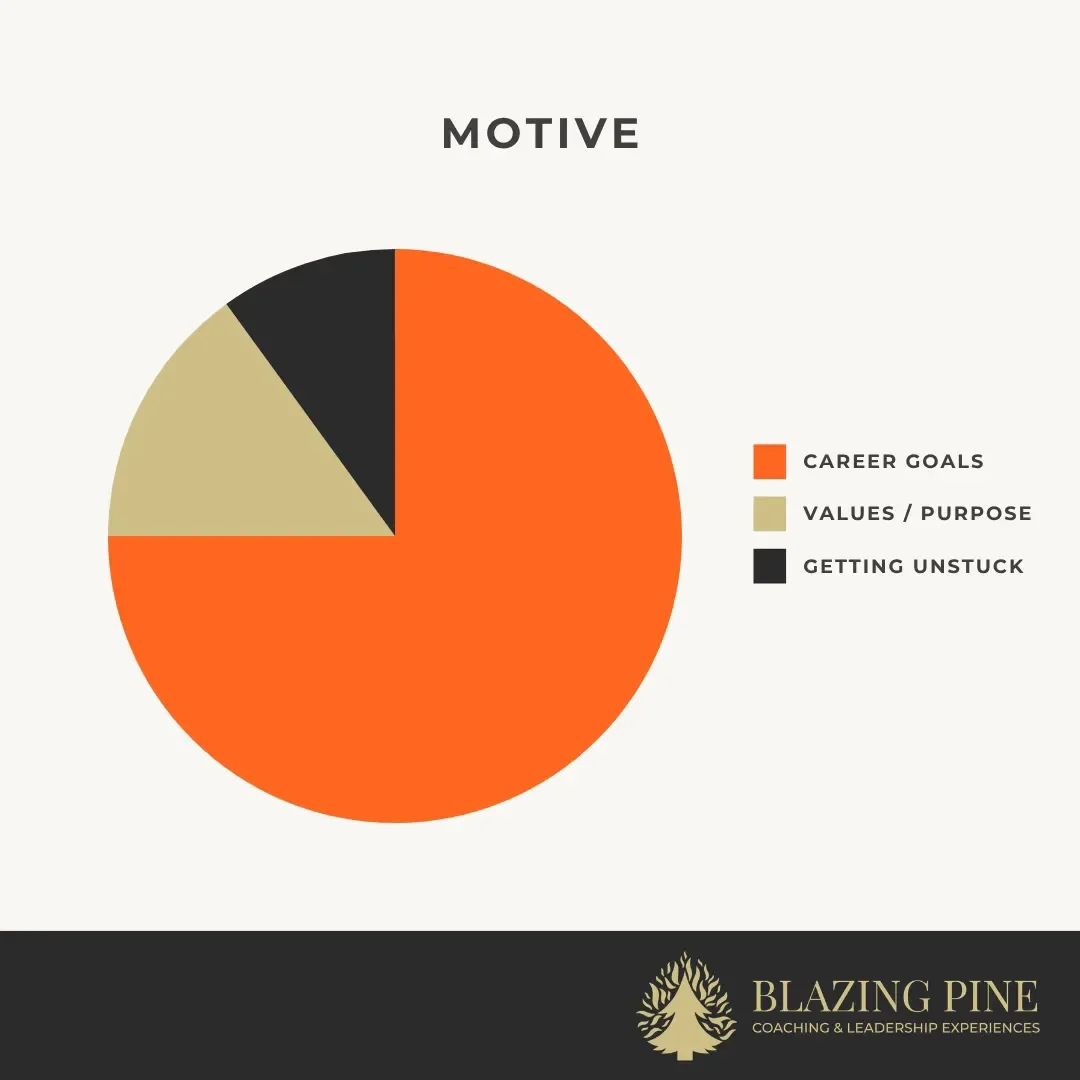
Motive Breakdown for Client Coaching
And the breakdown of the 75% that are in the “career goals” category:
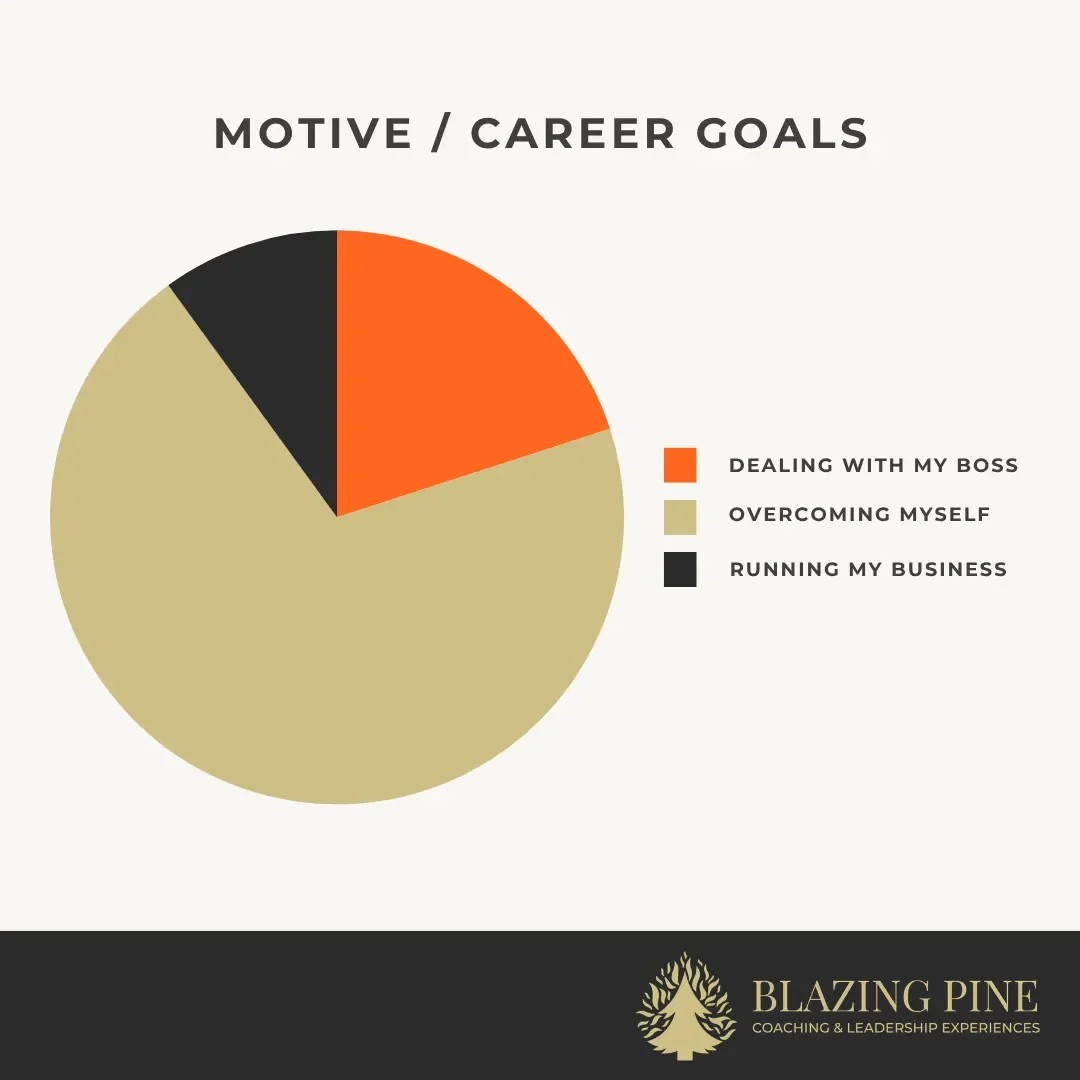
Motive / Career Goals for Coaching Clients
It’s not surprising to see that “dealing with the boss” is a common topic. The more interesting data point here is that 70% of my career coaching clients are motivated by overcoming something not about someone else, but about themselves.
And if you think about it, this makes sense. Saying “yes” to coaching ultimately requires a level of self-awareness that the only thing you can change is your own approach to understanding and tackling problems; the external world is largely outside our direct control.
What’s interesting is looking in greater detail at what “overcoming myself” actually means. Because this is where coaching can and does really help. Issues like:
Imposter syndrome
Self-advocacy
Confidence and authority
Emotional regulation
Perfectionism
And leadership behaviours more generally (delegation, influence, etc.)
I’ve seen major breakthroughs in all of these areas for my clients, not solely because of anything I’ve done, but because they were willing to confront those issues and the consequences head-on, make an honest assessment of their own role in exacerbating them, and adopt strategies for overcoming them.
A client with self-described “crippling” imposter syndrome has found ways to repeatedly overcome it when it shows up (and note I don’t say it’s gone away - it doesn’t - only that we can find ways to handle it when it gets in the way).
Another who needed to advocate for themselves and their position within their organisation is celebrating an upcoming promotion - having found ways to do just that, without having to compromise on their own values.
And a rising star within their company, promoted to a tough leadership position at a relatively young age, has established themselves with gravitas and authority in that role, having been willing to do the work to fill the experience gap with other approaches.
These are real examples with real people behind them, not hypotheticals I made up to fill an article. And I can cite many more like them. But my main point is that this is where coaching has been very effective for my clients - and it can be for you too. You just need to say yes to doing the work.
»«
There’s one other thing I want to highlight about motive, which is that I’ve observed, repeatedly, that it evolves over time. What felt important at the beginning of the coaching relationship often turns into something else, and usually, it follows a trend from the “career coaching” end of the motive arc, to the “values and purpose” side.
What starts as “I want to perform better in my role” often becomes “I want to figure out why I do things the way I do, what this means for my future, and whether I’m fully living out my potential”.
Ultimately, it becomes the search for purpose.
»«
Arguably the highest expression of our need for, and pursuit of, purpose from the past hundred years of literature and research is Viktor Frankl’s book Man’s Search for Meaning. Most of you will know this work, but for those who don’t, Frankl recounts his experiences living through the horrors of Auschwitz and his survival through defining and pursuing meaning from that experience. He was one of the leading proponents of the logotherapy school of psychology, which holds that our primary driving force as human beings is not pleasure or gratification, but meaning and purpose.
This premise requires us to find meaning in great suffering, to choose our response to it, and live out our lives according to what we find.
I will write more about this in the second part of this piece next week. But what I have observed from my coaching practice - and I don’t need to say that I’m very much not a therapist - is that Frankl’s theory proves itself right, time and again.
Our daily challenges and problems ultimately, over time, and under scrutiny, reveal our purpose. If we look for the meaning in them, we just might find what we’re supposed to be doing with our lives. It doesn’t always mean a change of career, but at the bare minimum, it requires a change of mindset.
It’s a fascinating idea: the notion of our freedom to choose our response to suffering and to use our choice to a productive outcome.
So more to come next week.
In the meantime, pick up a copy of the book. It has changed countless lives. It might just change yours.